
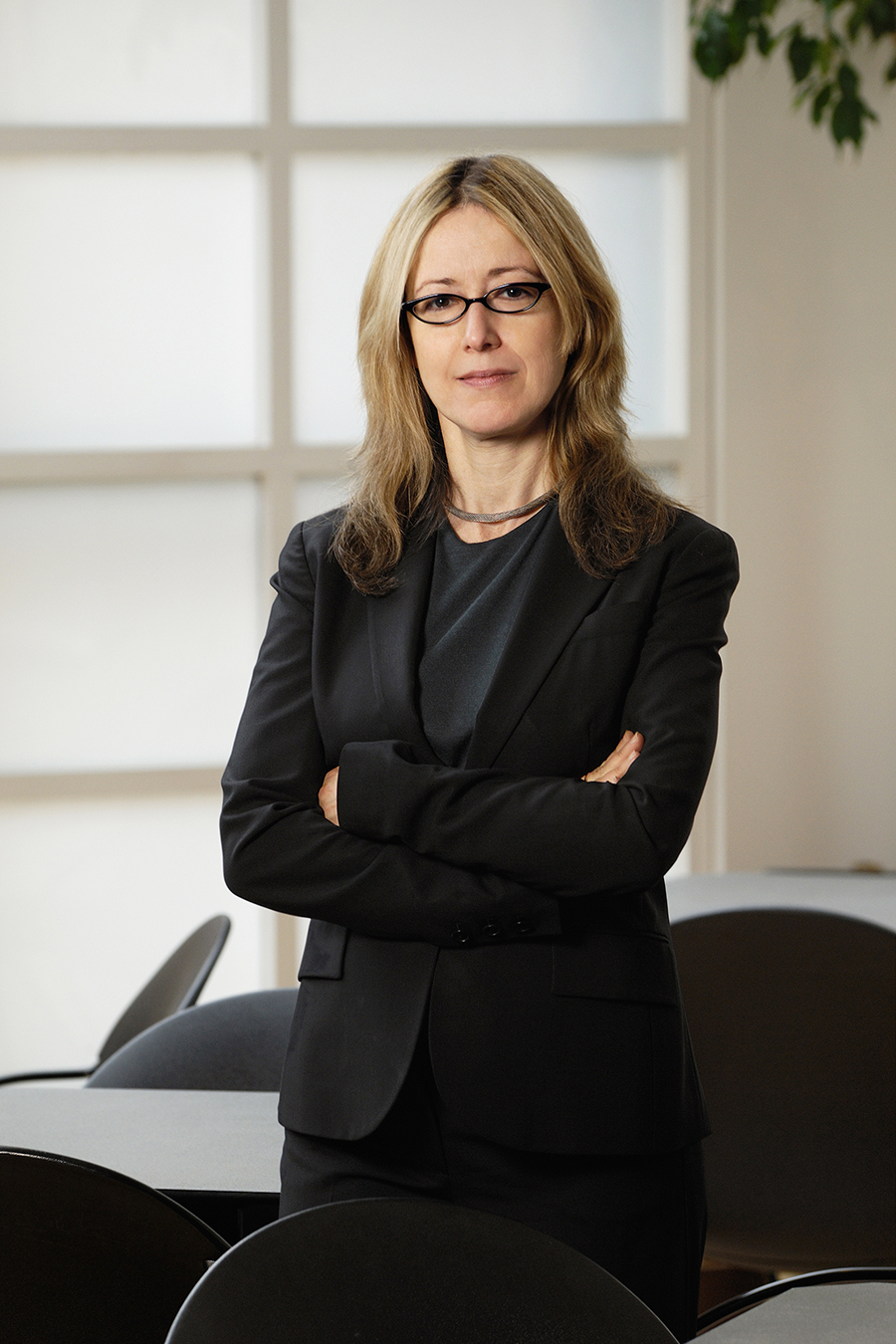
Professor Ruti G. Teitel Answers the NYLS 10
Ernst C. Stiefel Professor of Comparative Law Ruti Teitel is a renowned global scholar credited with establishing transitional justice as an area of academic inquiry and one of the leading experts on international human rights. At New York Law School, she serves as Co-Director of the Center for International Law, Chair of the Global Law and Justice Colloquium, Director of the Institute for Global Law, Justice, and Policy. She is also the founding Co-Chair of the American Society of International Law Interest Group on Transitional Justice and Rule of Law, as well as a life member of the Council on Foreign Relations, and a frequent lecturer on the global dimensions of transitional justice and serves on many advisory boards, including the London Review of International Law and the International Journal of Transitional Justice. She has authored a vast body of work and pioneering scholarship that has had profound international impact.
Here, Professor Teitel answers the NYLS 10—10 questions about her work, her interests, and the things she looks forward to.
1. What is the focus of your work?
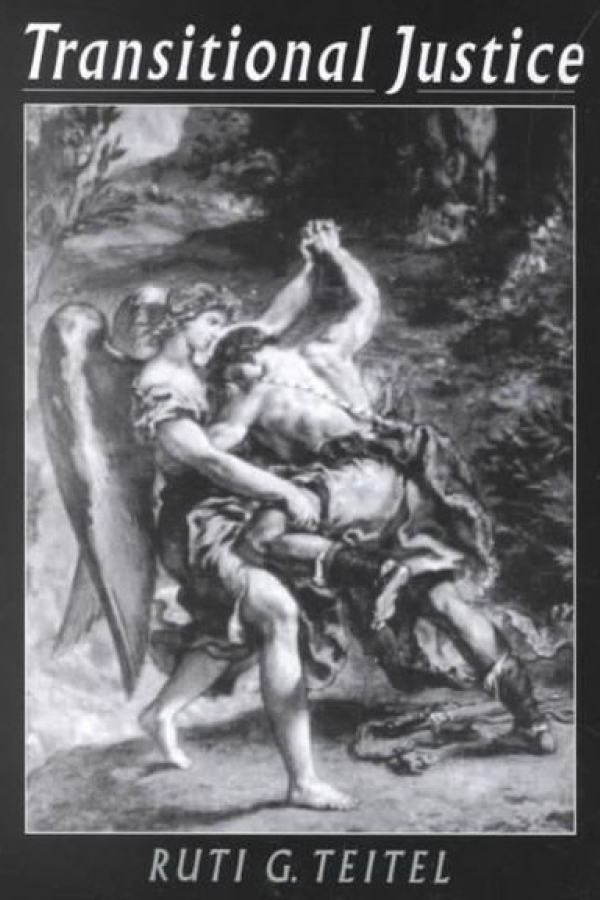
The focus of my work for many years now has been transitional justice and the role of law in periods of radical political change. I wrote my first book, Transitional Justice, which was animated and inspired by the revolutions in Latin America, South Africa, and eastern Europe when the Berlin Wall came down. I'm originally from Argentina, so my initial interest was what was happening in Argentina after the end of military rule and how they insisted on trials, not some other form of reconciliation. Around the same time, Chile went with a Truth and Reconciliation Commission. I started writing about the varying approaches that different countries took to reckoning with the past, and once the Soviet Union collapsed, I realized the subject was worthy of a book, not just an article or a series of interviews.
The production of the book took many years. When it came out in 2000, it was very well received. And today I am still working on issues of transitional justice, some of it even in the field trying to help people in different countries who are trying to implement their own transitional justice, like Syria and Taiwan.
My latest book, Presidential Visions of Transitional Justice: An American Legacy of Responsibility and Reconciliation (2025), has just been published, and this is the first time I'm writing about America. I had included a small part in my first book about the post-Civil War period, but this entire book is about the United States, reckoning with its history, and the innovative ways in which different U.S. presidents have handled wartime, conflict resolution, peacemaking, and various civil rights claims that came out of their respective periods. It’s been exciting because it's about restoring the United States to world history and to this area of politics and law.
2. How have your interests changed over your career?
I couldn't have predicted it, but it's a quarter of a century later and I am still very much involved with transitional justice on a global scale. I am credited with creating the field. I first used the term in my 1991 grant application to the United States Institute of Peace, where I was discussing periods of political change and transitional justice as a bridge between regimes, and after the book came out, the term caught on globally. My work has been translated into Chinese, Spanish, Serbian, and other languages. I wrote a second book, Globalizing Transitional Justice: Essays for the New Millennium (2014), based on 15 years of essays after Transitional Justice.
I'm also beginning to work on writing an intellectual biography of a lawyer who is known as the father of international law, Hugo Grotius. When I first came into law teaching, I was writing about religion, the state, and the constitution, and because so much of his work touches on these topics, it is in many ways a return to some of those interests.


3. How do people respond to your work?
It’s been great that I've had many responses from more than one sector. There have been all kinds of scholarly, interdisciplinary responses to my work. Recently, I was honored by a symposium of international law scholars to celebrate the 20th anniversary of Transitional Justice. Other examples from several years ago include the American Society of International Law forming an interest group focused on transitional justice and rule of law; the creation of many academic and research programs on transitional justice throughout Europe and throughout the world; and there have been many master’s and doctoral students whose research engages with transitional justice.
That is one of the most inspiring aspects of the responses to my work—that it’s not just colleagues but students responding. I've supervised master’s students and Ph.D. students who have brought new ideas about transitional justice to the table, and it's been wonderful to see how it has sparked interest and helped law students and students of politics and philosophy with a framework that describes periods that are chaotic and difficult.
And then there's the activist side. I'm always grateful when the work is helpful to people in the field. I'm currently collaborating with Fadel Abdul Ghany, the CEO of The Syrian Network for Human Rights, on articles that discuss what the current approach in Syria should be to transitional justice after the fall of Bashar al-Assad, including a shorter piece for Just Security, a leading international law and security digital journal, and a longer law review article.
I’m thankful that my work has been helpful to so many others. Indeed, most recently regarding transitions in Colombia and in Israel/Palestine where I regularly lecture.
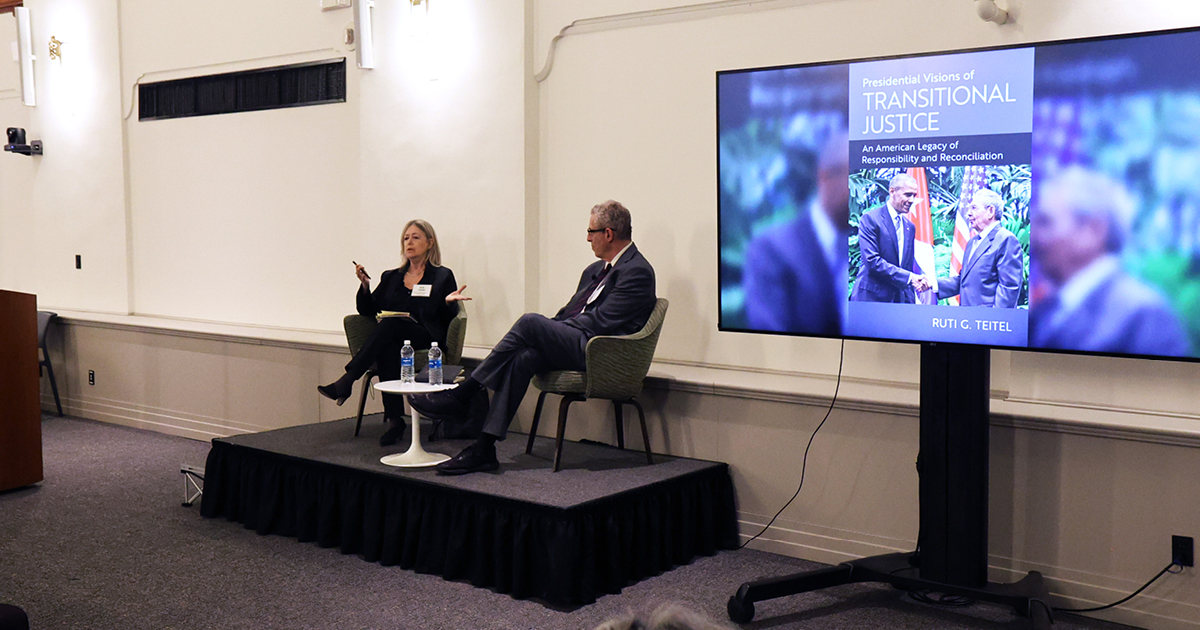
Professor Ruti Teitel in conversation with University of Maryland Francis King Carey School of Law Professor Mark Graber.
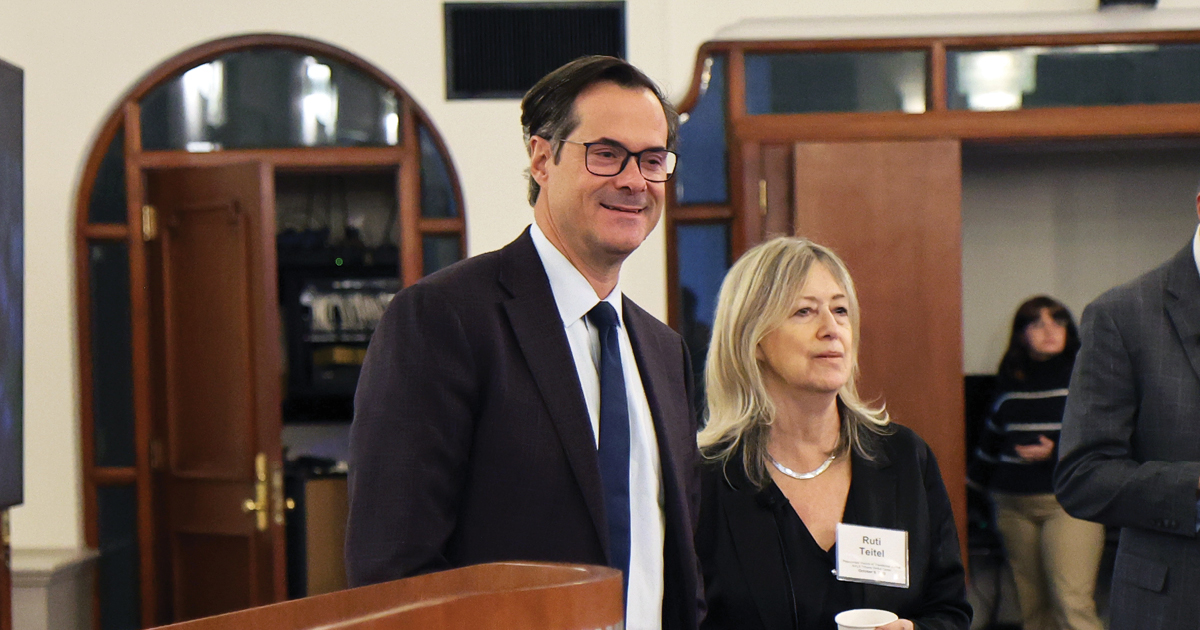
Dean Anthony Crowell and Professor Ruti Teitel at the launch of her new book, Presidential Visions of Transitional Justice: An American Legacy of Responsibility and Reconciliation (2025).
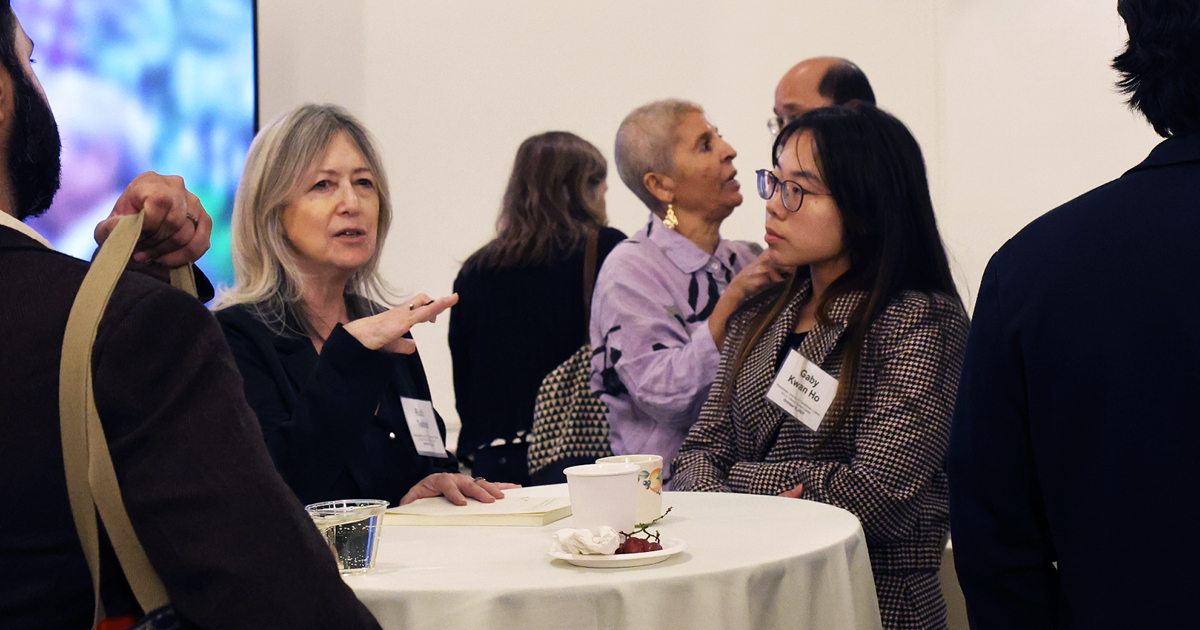
Professor Ruti Teitel signs a copy of her book and speaks with NYLS students.
4. What’s a problem you wish you could solve with a snap of your fingers?
I’m often asked questions like this about what a country “should” do during these transitional periods. When I was in Taiwan at a book launch in 2019, a student asked, “What truth do we need to investigate and what truth do we need to know in order to move forward?” The truth is that it always depends. It depends on the context; it depends on the society; it depends on the nature of the repression of the prior political regime; and it also depends on how much norm change the society can tolerate and seeks. So as much as that's an appealing question for me—that transitional justice could be solved with a finger snap or that there could be a single formula for success—I resist that. There have been times when I was asked to consult that I’ve had to go into meetings and explain why one country’s approach wouldn’t necessarily be the “right answer” for another country. I strongly believe that there is no one-size-fits-all solution.
5. What questions do you have that you want to be able to answer with your work?
I think the issue of transitional justice is significant when you're moving from one political context or economic context to another, and I feel like in this country, we are also in transition in a way. We’ve come out of a particular period, and we’re heading into a high-tech period with concerns about globalism and how to do globalization better. That's a problem I wish I could resolve because the concern that we’re in a zero-sum game creates so much resistance to the idea of foreign people and foreign concepts, but I believe that having colleagues from all over the world has enriched my life and could be enriching for so many others.
6. How do you approach teaching law?
I think we all in part were shaped by our own legal education, but also in ways after law school when we graduate and see other ways of transmitting knowledge. I've always been a fan of a combination of approaches. I typically start out with a bit of lecture and setting out what I view as needed knowledge and needed information for students, then directing questions to the students and engaging them that way, and sometimes using breakout groups. I would say it's a mix of lecture and Q&A or discussion.
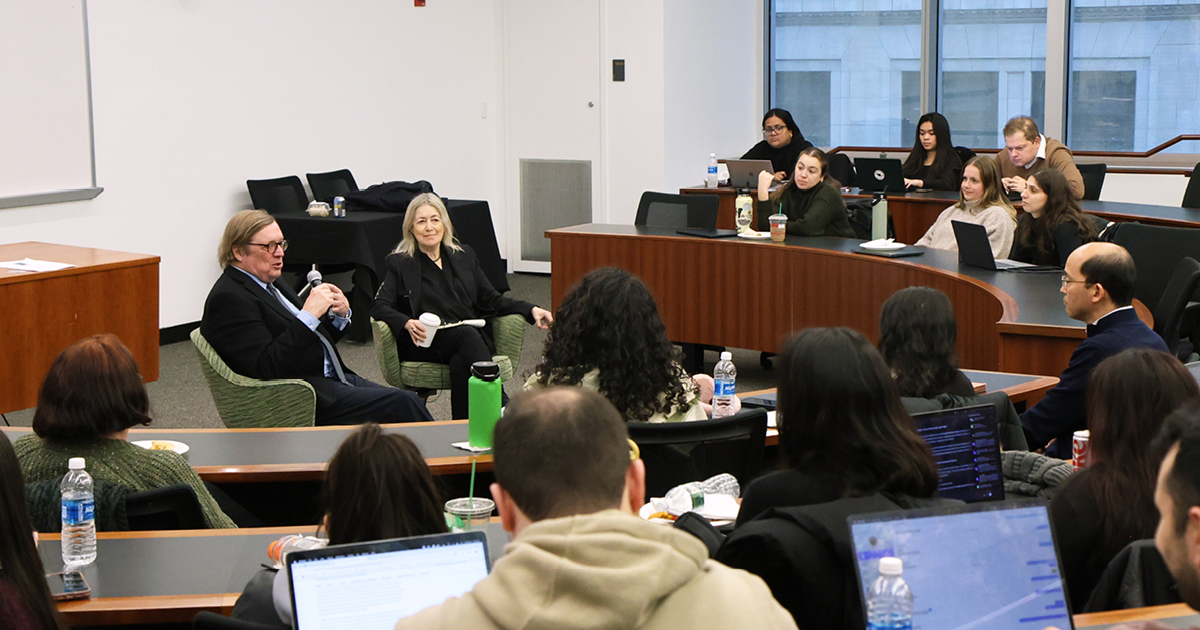
Professor Teitel moderates a discussion on the past and present of global justice with Ambassador David J. Scheffer.
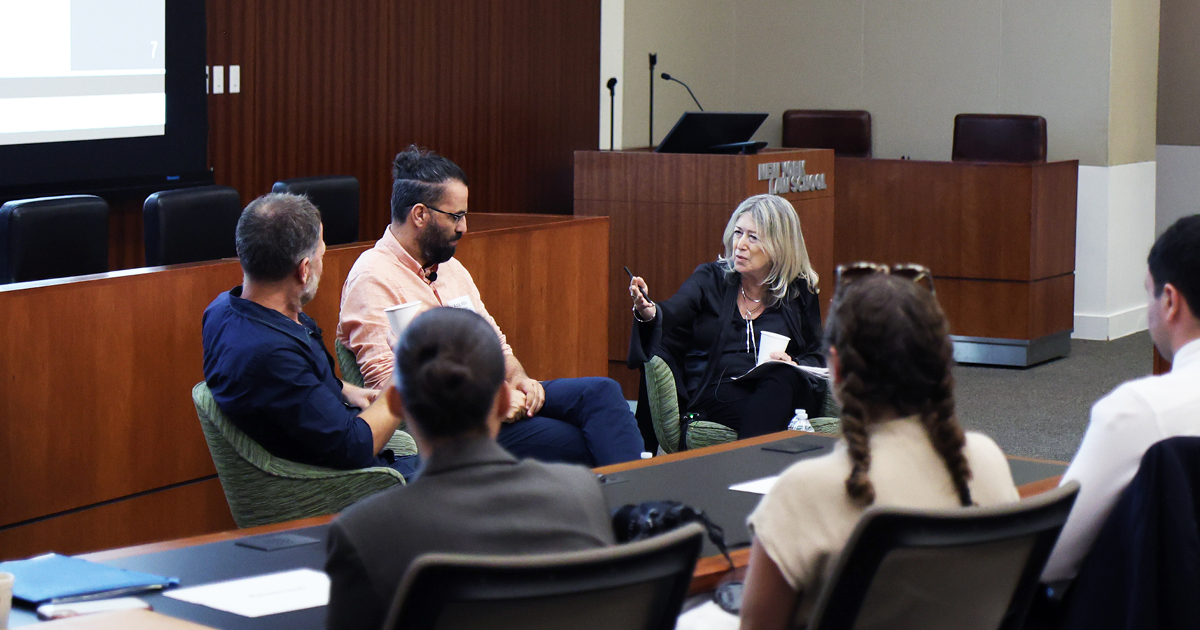
Professor Teitel moderates a conversation with Aziz Abu Sarah and Maoz Inon on their new book The Future Is Peace.
7. What are you excited about these days?
Currently, I’m excited about my new book because it offers a framework for how we might think about the past in the United States and how we might move forward, and I look forward to seeing how others might engage both in scholarly ways and in practice here. I think that this is an auspicious time for us to be reckoning with mistakes made and decisions of the past. It's the mark of a mature society to be able to take accountability and move forward, and I have every hope that we can move in that direction.
8. What’s the next year like for you?
I have a busy year ahead. For starters, I'll be here in New York City at NYLS looking forward to teaching our great students international law, international human rights, and international criminal justice. I’ll also be traveling to discuss Presidential Visions of Transitional Justice at a number of upcoming events, including a panel at the Council on Foreign Relations, a symposium hosted by the constitutional blog Balkinization, and overseas talks in London. I'm enjoying the interdisciplinary conversations, and there's always something new when you have a chance to dialogue with other folks about engaging in related areas.
9. Whose work excites you these days?
As I mentioned, I'm working on a short, intellectual biography of Hugo Grotius, who is a fascinating character. I find his personal history and writings intriguing. He was a Dutch humanist, diplomat, lawyer, theologian, jurist, statesman, poet, and playwright in the late 16th and early 17th centuries. He spoke several languages. He wrote poetry, tragedies as well as seminal law books, including The Law of War and Peace, which is widely regarded as a foundational text in the development of international law. Grotius was an advocate for tolerance when Europe was exploding with the religious wars—he himself was persecuted in Holland when authorities went after his denomination of Protestantism. At a time of heightened religious divisiveness around the world, my view is that Hugo Grotius and his attempts to create common ground hold meaningful lessons for contemporary audiences.
10. What are you reading, watching, or listening to?
I’ve recently read Radical Hope: Ethics in the Face of Cultural Devastation by Jonathan Lear, who was a philosopher at the University of Chicago. It’s a probing narrative about how the Crow Nation survived their own holocaust, taking a philosophical, ethical, and anthropological look at how they adapted when faced with the end of their way of life. It’s been a truly remarkable read.
I'm also watching The Diplomat. I find it exciting and topical in terms of current foreign affairs dilemmas as well as reflecting the challenges of being a woman in these largely male spheres. I can't say that it’s the most relaxing program to watch at the end of the day, but I enjoy it.