
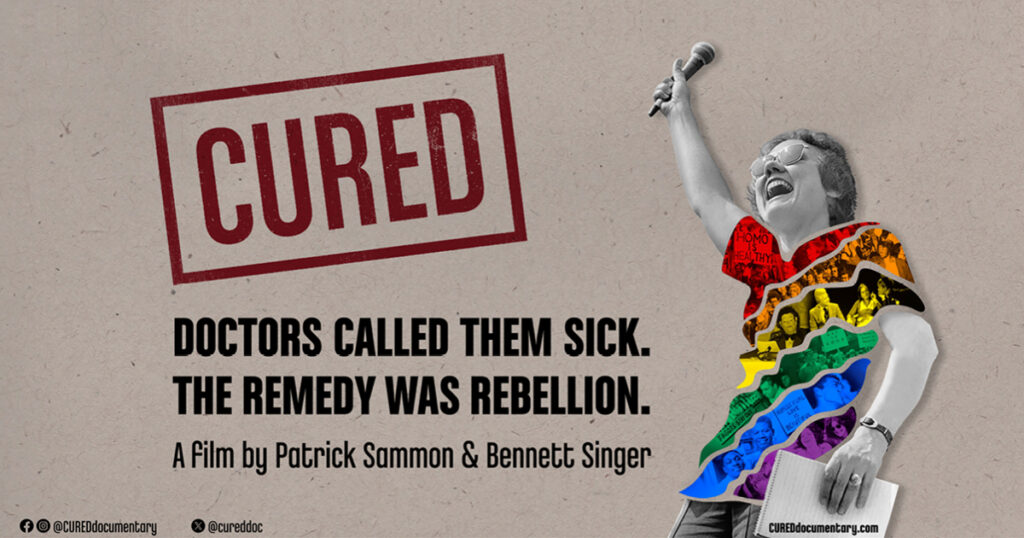
New York Law School (NYLS) recently hosted a screening and panel discussion of CURED, a 2020 documentary chronicling the fervent activism that led to the removal of homosexuality from the Diagnostic and Statistical Manual of Mental Disorders (DSM) in 1973. The event, presented by the Wilf Impact Center for Public Interest Law and sponsored by Dorf Nelson & Zauderer LLP, joined our community with local activists, legal leaders, and members of the bench to reflect on that pivotal moment in LGBTQ+ history and its lasting legal impact.
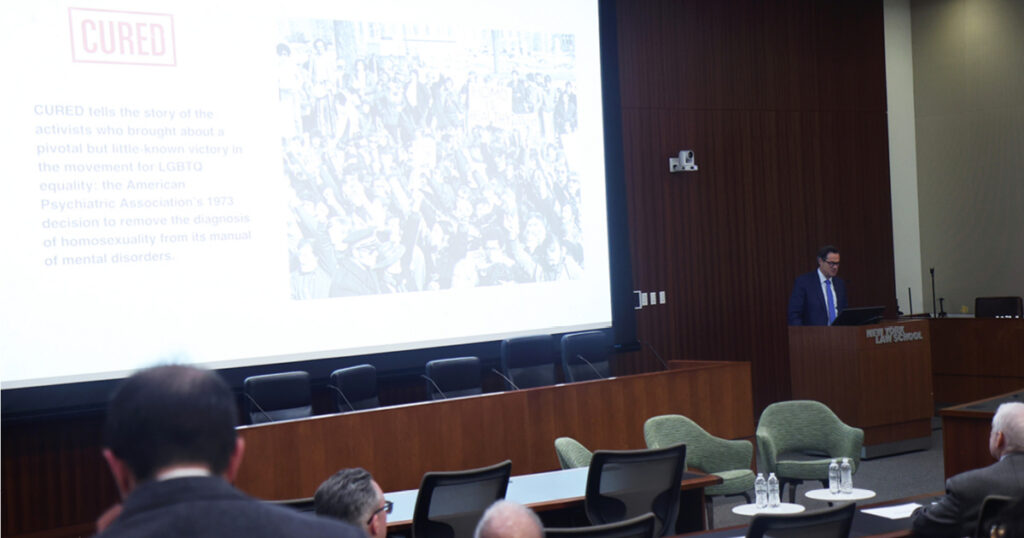
The evening began with remarks welcoming guests and co-sponsors. Dean and President Anthony Crowell recognized Professor Emeritus Arthur S. Leonard as a foundational figure in LGBTQIA+ legal scholarship, noting the profound impacts of his work over decades. Other speakers, including Yazmine Nichols, Associate Director of the Wilf Impact Center for Public Interest at NYLS; Jonathan B. Nelson, Partner at Dorf Nelson & Zauderer LLP; and Hon. Austin D’Souza ’11 of the New York State Unified Court System, echoed the message that rights are not static achievements but ongoing struggles, and helped frame the documentary as a transformative display of persistent and collective activism.
CURED: A Story of Activism and Institutional Change
The documentary is driven by the personal accounts of those who challenged the American Psychiatric Association’s (APA) classification of homosexuality as a mental illness. Drawing on archival footage and firsthand retellings, the film showcases the courage and persistence needed to confront entrenched medical and societal norms.
The documentary traces the evolution of homosexual “treatment” practices, from early talk therapy to more extreme interventions such as electroshock therapy and lobotomies, exposing the flawed and dangerous assumptions underlying said approaches. It also spotlights key figures in the movement, including activists like Frank Kameny, Barbara Gittings, and psychiatrist Dr. John E. Fryer, who spoke anonymously at the 1972 APA convention to advocate for the LGBT community.
A central turning point came in 1973, when, after years of protest and advocacy, the APA voted to remove homosexuality from the DSM. As the film aptly notes, this decision effectively “cured” millions—not by changing who they were, but by eradicating the harmful label imposed upon them.
Panel Discussion and Audience Q&A: Bridging Past and Present
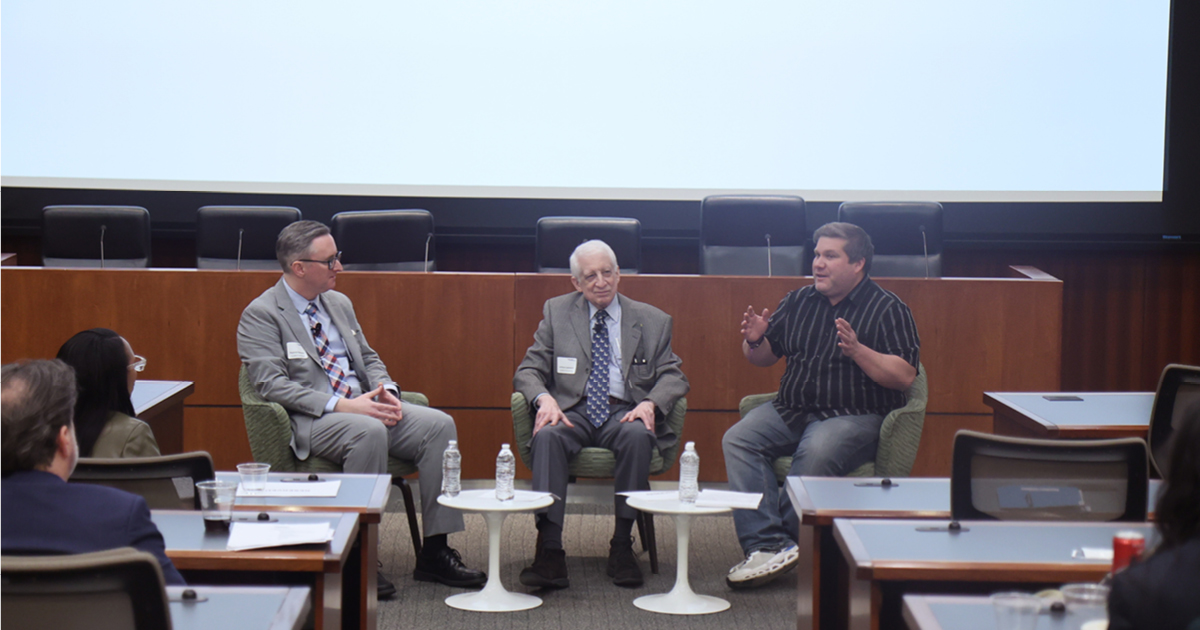
Following the screening, Professor Leonard moderated a panel featuring CURED co-director Patrick Sammon and Lambda Legal Senior Counsel and Health Care Strategist Omar Gonzalez-Pagan. The discussion explored both the origins of the film and the broader legal and cultural implications of the history it documents.
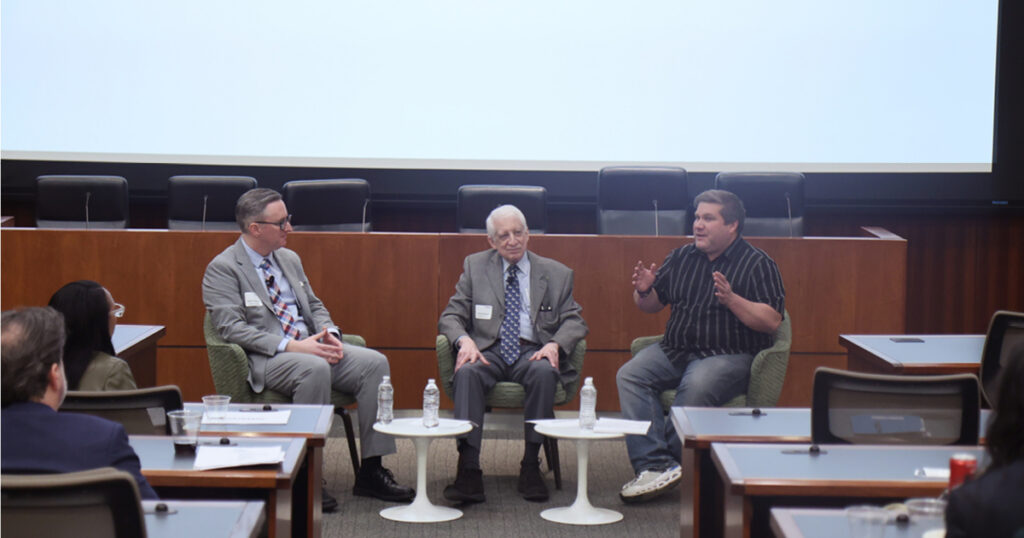
Sammon described the film’s genesis as rooted in archival discoveries made by the Mattachine Society, including artifacts like an audio recording and photos of the masked appearance of Dr. Fryer. The urgency of capturing these stories, many of which risked being lost, became a driving force behind the film. Sammon emphasized that personal narratives were central to the movement’s success. While legal and scientific arguments played a role, it was the lived experiences of individuals that ultimately shifted perceptions and built momentum for change.
Professor Leonard reflected on the climate of the 1950s and 1960s, noting that many aspiring lawyers feared exclusion from the profession due to their sexual orientation. The removal of homosexuality from the DSM, he explained, helped lay the groundwork for subsequent legal advances, including challenges to discriminatory laws and policies.
Gonzalez-Pagan highlighted the decision as a “pinnacle moment” that enabled broader legal advocacy, including landmark cases that would eventually lead to marriage equality and anti-discrimination protections. He also pointed to the enduring influence of medical frameworks in shaping legal debates, particularly in contemporary discussions around gender identity and healthcare.
The audience Q&A session brought forward personal and thought-provoking perspectives, including from one attendee who shared their experience as a social work student in the 1960s. They recalled how the DSM’s classification of homosexuality shaped their understanding of themselves, and how even then, some educators anticipated change. Questions also addressed current challenges, including bans on gender-affirming care and the ongoing role of medical authority in defining identity. Panelists noted that debates over evidence and legitimacy continue to echo earlier struggles, underscoring the cyclical nature of these issues.
In reflecting on the film’s broader message, panelists and audience members alike returned to themes of resilience, visibility, and community. A particularly moving moment occurred when Sammon shared a video message from one of the film’s participants, Reverend Magora Kennedy, calling for the “love and acceptance of children as they are” and encouraging the audience to live authentically despite adversity. All in all, the screening and panel discussion of CURED demonstrated how legal, medical, and cultural systems intersect, and how they can be challenged and transformed through the power of collective action.
