
The Family Law Quarterly Celebrates Five Years at NYLS
Alongside our 135th anniversary, New York Law School (NYLS) is celebrating our fifth year as the academic home of the Family Law Quarterly (FLQ)—the nation’s leading family law journal published by the American Bar Association’s (ABA) Family Law Section.
Professor Lisa F. Grumet, Director of the Diane Abbey Law Institute for Children and Families, helped bring FLQ to NYLS as part of a larger effort to expand the Law School’s nationally recognized family law program. The Institute, founded by Diane Abbey, provides a range of opportunities for students to engage in policy research and advocacy, client representation, and writing related to children’s and family law issues. Following a competitive nationwide selection process, the ABA partnered with NYLS to produce the journal, with the first NYLS-edited double issue published in March 2021.
FLQ issues are planned alongside the ABA through a national editorial board of practitioners and scholars. NYLS and the ABA produce three issues per year, each with a particular purpose: 1) A themed issue, focusing on timely national topics; 2) A “Year in Review” issue, featuring nationwide statutory charts, student legislative summaries, and a survey of significant new cases; and 3) A “Current Practices” issue, providing space for additional articles and student writing competition winners.
Each year, more than 50 students help produce the journal through a collaborative structure that Professor Grumet and the inaugural student leadership team developed during the remote-work days of the pandemic. Learn more about how they got started.
“We built the team structure as a way to create community during COVID,” Professor Grumet recalls. “It worked so well for supporting students and keeping the workflow manageable that we kept and refined it. Now it’s the backbone of how FLQ operates.”
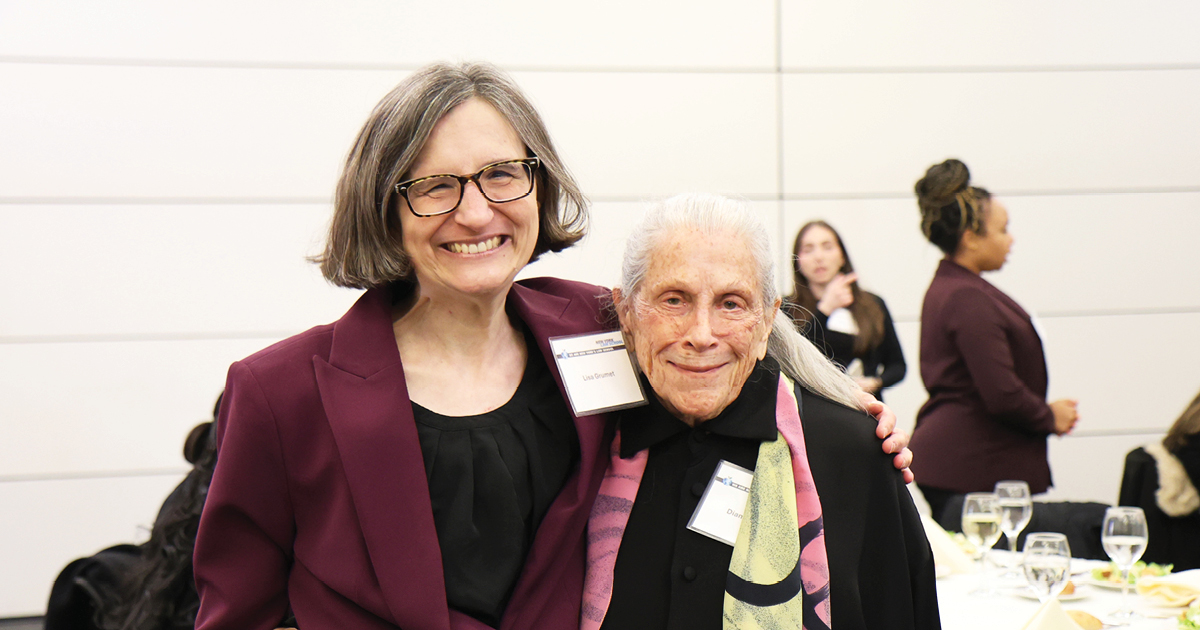
Professor Lisa F. Grumet and Dianne Abbey.
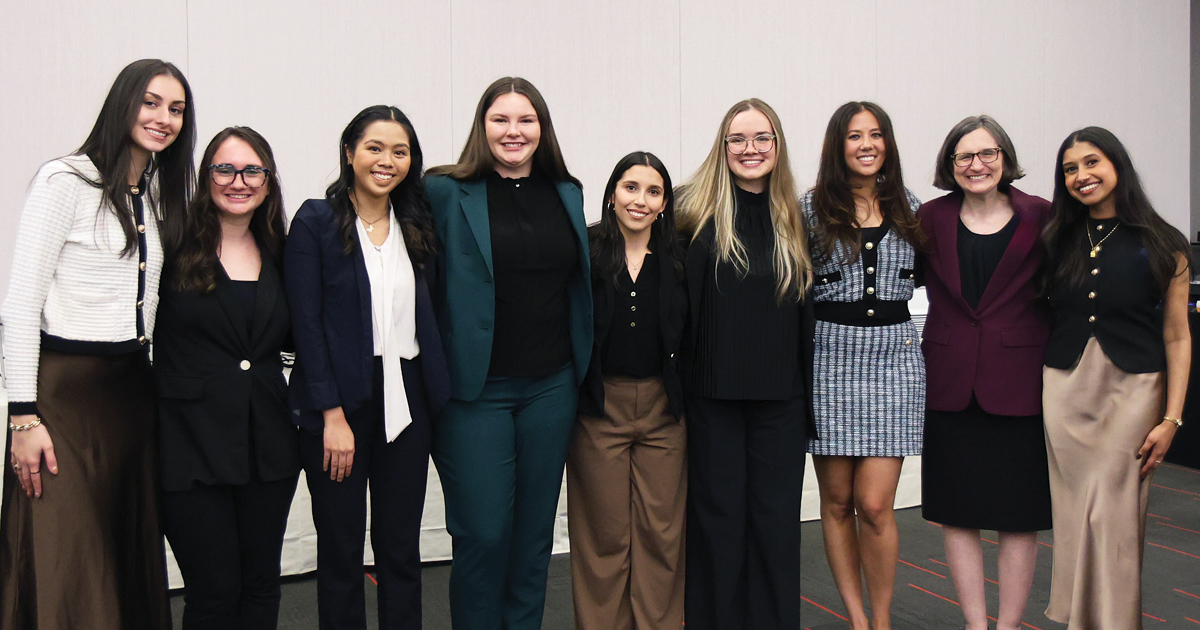
Professor Lisa F. Grumet with members of FLQ’s E-Board.
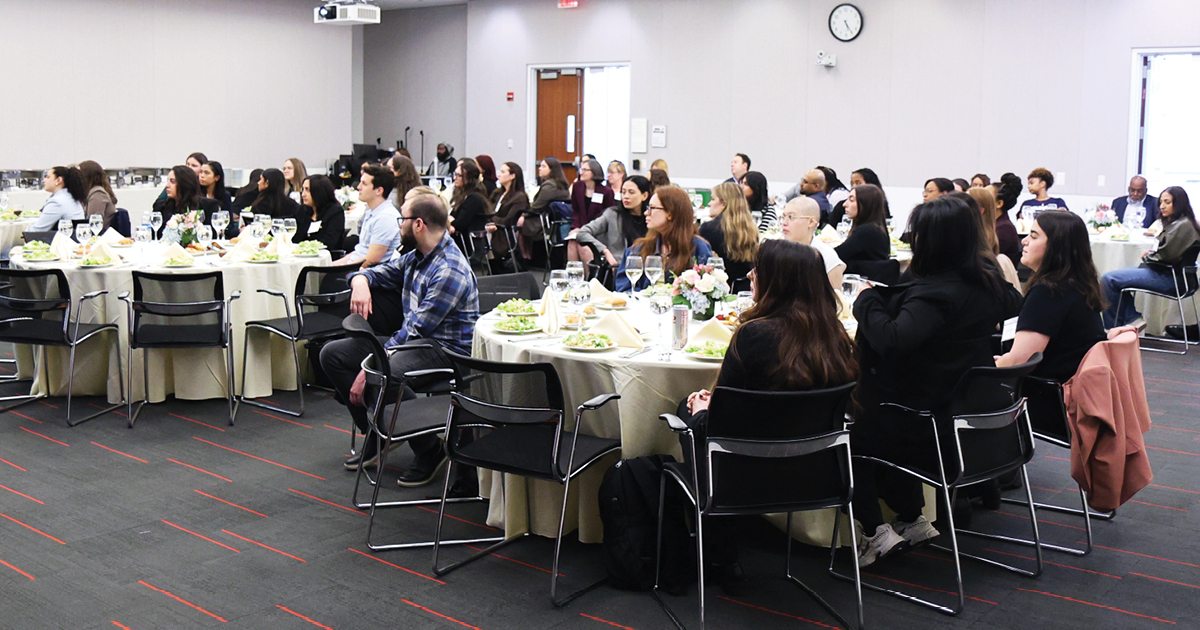
The NYLS community and guests join current and former FLQ members for the FLQ Annual Celebration.
FLQ student editors work in teams: Senior Editors lead, mentor, and provide feedback to a team of three Junior Editors who check article sources and citations, research and update 50-state statutory charts, and write summaries of newly enacted state legislation. The E-Board oversees journal production and teaches weekly seminars. Students sometimes work directly with authors, including scholars and practitioners, who visit the seminar to discuss their work. In the spring semester, all Junior Editors write about one newly enacted state law, contributing to a composite article that often covers more than 30 new statutes from across the country.
“Students really learn how state legislation directly impacts families and how policy differences play out across the country,” Professor Grumet says. “Sometimes the most compelling reforms emerge after a unique or unprecedented situation happens in one state and then gets adopted elsewhere. Students see firsthand how family law evolves.”
Beyond technical editing and research skills, FLQ exposes students to the broad range of issues that fall under the umbrella of family law, from domestic violence protections and child welfare to gender-affirming care and educational rights. That understanding of how deeply decisions of law and policy influence several aspects of someone’s life inspires and empowers students––whether they pursue family law directly or enter public service, government, education, or civil rights work. Many alumni of the program have moved into roles across the five boroughs’ District Attorney offices, Legal Aid, the NYC Administration for Children’s Services, parent representation offices, and other public service and nonprofit positions.
In its fall 2025 issue, the National Jurist awarded NYLS an A+ for our history of leadership in child and family law and for outstanding programming that promotes greater access to justice, contributes to meaningful legal scholarship, and supports a pipeline of skilled, compassionate family law lawyers. The journal also ranked first in the category of Family and Juvenile Law in the 2024 Washington and Lee University Law Journal rankings.
In the coming cycles, FLQ will publish issues on access to justice, assisted reproductive technology, and legal issues affecting LGBTQ+ youth. As NYLS celebrates this milestone, FLQ stands as a model of legal education that is community-centered, nationally impactful, and dedicated to improving the lives of children and families.
The FLQ recently hosted its annual celebration, featuring esteemed guests Arthur (’59) and Diane Abbey; Rachel Braunstein, Policy Director for Her Justice and FLQ author; Maleaha Brown, Clinical Associate Professor at the University of Houston Law Center and member of the ABA’s Board of Editors for the FLQ; Michael Mosberg, Partner at Mosberg Sharma Stambleck Gross LLP and the Past Chair of the ABA Family Law Section who brought FLQ to NYLS; Karen Platt ’99, Partner at Pryor Cashman and Vice-Chair of the ABA Family Law Section; and Aliyah Polner ’21, Assistant District Attorney in the Domestic Violence Bureau of the Queens DA and inaugural student Editor in Chief of FLQ. View photos from the celebration.
FLQ E-Board Quotes Spring 2026
“Being a member of FLQ has been an integral part of our law school experience. Throughout our combined five years of membership, we have navigated every aspect of the editing process and engaged with important family law issues. We will carry with us the immense knowledge and experience we have gained from FLQ. This experience has prepared us to approach our legal careers grounded in thoughtful, impact-driven advocacy.”
–Jacqueline Zamora ’26 (Student Editor in Chief) and Erin Martin ’26 Evening (Managing Editor)
“Working on FLQ has been one of the most meaningful and rewarding parts of our law school experience. It has sharpened our legal writing and analytical skills and strengthened our ability to engage with complex legal issues through research and editorial review. Beyond technical growth, FLQ helped us gain confidence as legal writers and future advocates by reinforcing the importance of careful, ethical, and collaborative legal work. It also gave us the opportunity to learn from and support one another, which built a sense of community extending beyond the journal, whether through serving on the editorial board or mentoring editors. As we progress through law school and into our professional careers, the lessons developed through FLQ will continue to carry into our coursework, clinics, internships, and post-graduate positions.”
–Mariam Meskhi ’26 and Richa Chandra ’26 (Executive Articles Editors)
“There is so much to learn through being part of FLQ, whether as a junior editor, senior editor, and executive board member. Our position offers the unique opportunity to track changes and trends in family law throughout the country while also being able to engage in legal research and editorial review. The editing process everyone is actively a part of has significantly helped our research and writing skills, as well as our ability to engage with a wide range of sources of information. It was through FLQ that we received additional training on how to navigate state statutes and legislative history materials, which are important skills to have as future attorneys and policymakers. Outside of legal research and review, being Law-in-50 editors has allowed us to build our confidence in public speaking and one-on-one communication. Furthering those skills have been very beneficial for both of us and will translate to our careers as litigators.”
–Maddie Spoerner ’26 and Chloe Adasa ’26 (Executive Law-in-50 Editors)
“FLQ has been foundational in further cultivating our love and curiosity for research and leadership while also strengthening our organizational and communication skills. As junior editors, we sought to absorb new experiences and insights from everyone involved in the journal, and as members of the executive board, we have continued to expand our understanding not only of the editing process and source cataloging, but also of the broader coordination required to sustain a successful publication. Through the many facets of our roles, we have developed meaningful skills in legal research and drafting, project management, collaboration, leadership and mentorship. These responsibilities have deepened our appreciation for the structure, professionalism, and teamwork that underpin academic publishing, making our work on FLQ one of the most valuable experiences of our time in law school. We look forward to continuing to use the tools we have obtained with FLQ over these past two years in our professional careers moving forward.”
– Jessica Zakhary ’26 (Research and Reference Editor) and Rachel Goryachkovskiy ’26 (Development and Communications Editor)