
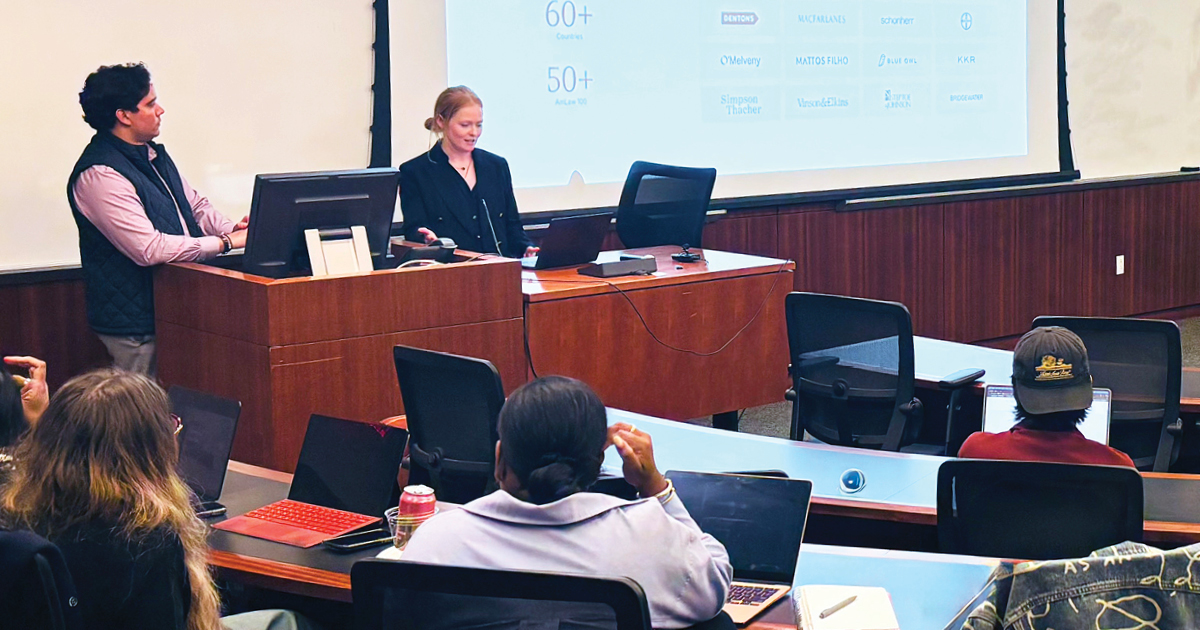

As artificial intelligence reshapes the legal profession, New York Law School (NYLS) launched “AI for Legal Graduates”—a first-of-its-kind, in-person crash course designed specifically for its graduating 3L day and 4L evening students. Led by Heidi K. Brown, Associate Dean for Upper Level Writing, and Michael Pastor, Dean for Technology Programs, the program gave soon-to-be lawyers the practical AI knowledge they need to hit the ground running in an AI-first era.
The course was offered across three sessions to accommodate the full graduating class and was deliberately designed to be interactive and ungraded—focused on real-world readiness rather than academic evaluation. Before diving into use cases and risks, Deans Pastor and Brown grounded students in the fundamentals: the difference between artificial intelligence, machine learning, deep learning, and large language models, and why GenAI is genuinely distinct from prior technological shifts. The goal from the outset was to help students cut through the noise, halt the “GenAI hype whiplash,” and approach the technology strategically rather than reactively.
What Students Learned
Each session followed a consistent structure built for maximum practical impact. The first segment introduced students to the most common AI use cases they’ll encounter in practice, including writing, research, case management, document review and fact extraction, transactional and corporate work, and brainstorming. A particular emphasis was placed on what Dean Brown calls “GenAI inflection points” in the writing workflow. These are moments—from outlining and synthesizing to vetting and proofreading—where AI can genuinely level up a lawyer’s work product. Students also engaged with an adaptation of the medical profession’s “See One, Do One, Teach One” teaching framework: the idea that to effectively direct AI, lawyers must first develop deep expertise in what a good legal work product actually looks like.
The second segment featured a live platform demonstration from Harvey, one of the most widely adopted AI tools in the legal industry. Grace Fish, Academic Partnerships Lead, joined every session, with Jonathan Stahl and Shlomo Amar, legal engineers, presenting at the first and second sessions respectively, and Farrah Pepper, Legal Innovation Partner, at the third. Students received a hands-on introduction to how leading law firms and in-house teams are using Harvey to elevate their practice and navigate complexity.
The third segment wove together risk mitigation and legal issue spotting—the essential counterweight to AI enthusiasm. On the risk side, students explored their ethical obligation under ABA Model Rule 1.1 to stay current on technology, the dangers of AI hallucinations in court filings, attorney-client privilege considerations, and the importance of understanding their organizations’ AI policies. The legal issue spotting component covered privacy and cybersecurity obligations, regulated entities, consumer protection, emerging liability and litigation trends, and the growing legal risks around algorithmic decision-making. The session closed with a forward-looking discussion on legal job-crafting and upskilling—including entirely new AI-infused legal roles beginning to emerge across the profession.
A Community Effort
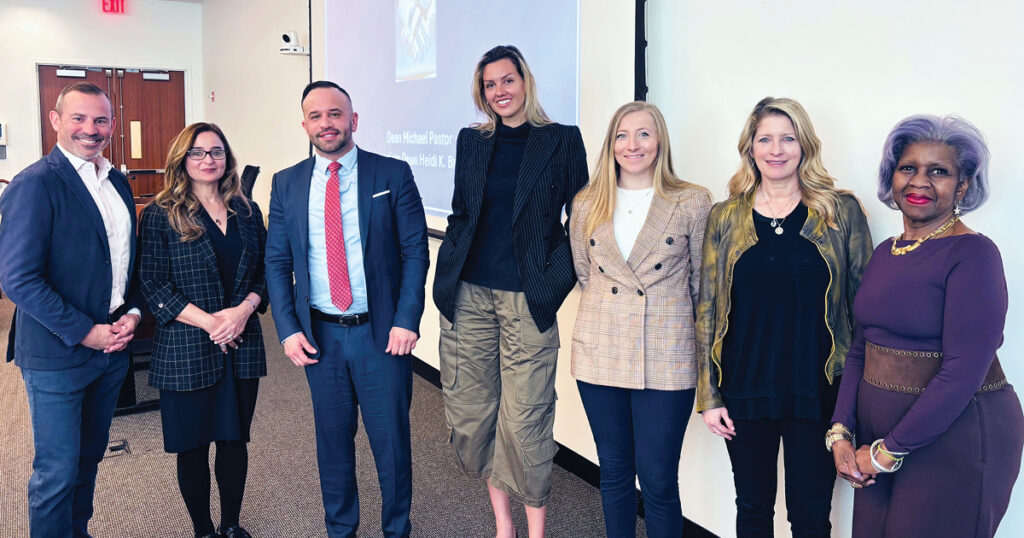
What elevated the program was the roster of accomplished alumni who joined as guest coaches across the three sessions, bringing practitioner perspective that no textbook can replicate. Rana Matared ’23, Jacqueline Lacovara ’24, Charles Post ’10, Steven Harber ’92, Lydia Payne-Johnson ’96, Nicoletta Kolpakov ’25, Dominic Mauro ’10, Chynna Foucek (Brooklyn Law ’21), Chinnu Joseph ’14, and Gina Okum ’96 each helped transform the sessions from lectures into genuine conversations about how AI is changing legal work right now.
“It was incredibly meaningful to participate in AI for Legal Graduates and see the School take such a practical, forward-looking approach to preparing students for the profession they’re actually entering. AI isn’t just another legal tech tool, it’s reshaping how legal work is created, evaluated, and delivered. Tomorrow’s lawyers won’t be successful because they use AI, but because they understand when to trust it, when to challenge it, and how to integrate it responsibly into high‑stakes legal work.” — Charles Post ’10, EVP, Cimplifi
Looking Ahead
The debut of AI for Legal Graduates signals something important about NYLS’s vision for legal education: that preparing students for the profession means preparing them for the technology redefining it. The overwhelmingly positive response across all three sessions—and the momentum already building around future offerings—suggests this won’t be the last time NYLS brings its graduating class to the frontier of law and AI together.